






Great Books – 2027
Twelve monthly conversations
Second Tuesday, 10–11:30 AM Pacific
Recordings included
Academic credit available
What makes a Great Book great?
At the heart of the world wisdom traditions are books that distill the essence of the teachings of the masters down through the ages. Many have no authors, some are compilations over long periods of time, others reflect teachings of masters who themselves never wrote a word. Socrates and Jesus never wrote any books, for instance, but Plato wrote his Dialogues recalling his memory of what Socrates said and the Gospels recount the life of Jesus many decades after Jesus had gone. Other books have legendary authors but appear to be compilations heavily redacted over many centuries. Some books are considered “God’s word” such as the Bible or the Koran and have endured for millennia inspiring countless millions of believers. Others remain obscure and speak deeply symbolic truths hidden within the layers of the language in the text itself. Still others express the essence of a tribal tradition on the brink of extinction and are valued for what is on the verge of being lost. Great books continue to be written by individuals alive today.
Each year, Dr. Jim Garrison and Dr. Gyorgyi Szabo choose six books they consider “great” and examine each one. Guest lecturers with specific expertise participate in dialogue or as lead lecturers. This course is available for Internal Online Independent Study.
Books 2027
January / February 2027
The Politics of Possession
by Jim Garrison
With Jim Garrison, PhD
A conversation with the author
Our world is falling apart. We are witnessing the simultaneous collapse of Western civilization, the US empire, American democracy, the ideology of Zionism and Judeo-Christianity as we have known it. The most technologically advanced and knowledge rich civilization, empire, nation and religious tradition in history is self destructing right before our eyes with consequences reverberating globally.
Driving the chaos on the geostrategic and sociopolitical levels are the United States and Israel. They are jointly destroying the global order, unleashing war and destruction globally and committing genocide in Gaza and the West Bank.
The questions we must ask ourselves are: what in the world is going on here? How did Israel come to do to the Palestinians what the Germans did to the Jews? Why are the US Government and evangelical Christians so fervently supportive of Israel’s genocide? Why is the genocide being committed with American money, American weapons, American logistics and American technology, all wrapped in an American flag?
About Jim Garrison
Jim Garrison is the founder and president of Ubiquity University. His work spans philosophy, history, global affairs and decades of social and political activism. He holds a master’s degree in the History of Religion from Harvard University and a doctorate in Philosophical Theology from the University of Cambridge. An author and lifelong reader of wisdom traditions, he teaches across religious, philosophical and contemporary global questions.
March / April 2027
Flight of the Wild Swan
by Melissa Pritchard
With Gyorgyi Szabo, PhD
A majestic novel of Florence Nightingale, whose courage, self-confidence, and resilience transformed nursing and the role of women in medicine.
Sweeping yet intimate, Flight of the Wild Swan tells the story of Florence Nightingale, a brilliant, trailblazing woman whose humanity has been obscured beneath the iconic weight of legend. From adolescence, Nightingale was determined to fulfill her life’s calling to serve the sick and suffering. Overcoming Victorian hierarchies, familial expectations, patriarchal resistance, and her own illness, she used her hard-won acclaim as a battlefield nurse to bring the profession out of its shadowy, disreputable status and elevate nursing to a skilled practice and compassionate art.
In lush, lyrical detail, Melissa Pritchard reveals Nightingale as a rebel who wouldn’t relent—one whose extraordinary life offers a grand lesson in inspired will.
About Gyorgyi Szabo
Gyorgyi Szabo is Dean of Graduate Studies at Ubiquity University and holds a doctorate in Sociology, awarded summa cum laude by the Sorbonne, University of Paris. She co-founded the Ervin Laszlo Center for Advanced Study and has worked internationally in research, education and conscious evolution. Her teaching brings together scholarship, metaphysics and an interest in how people can cooperate toward a peaceful and regenerative world.
May / June 2027
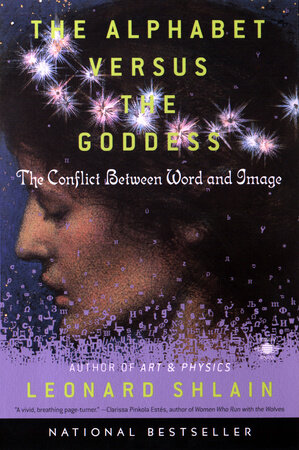
The Alphabet Versus the Goddess
by Leonard Shlain
With Jasmine Khushki
September / October 2027
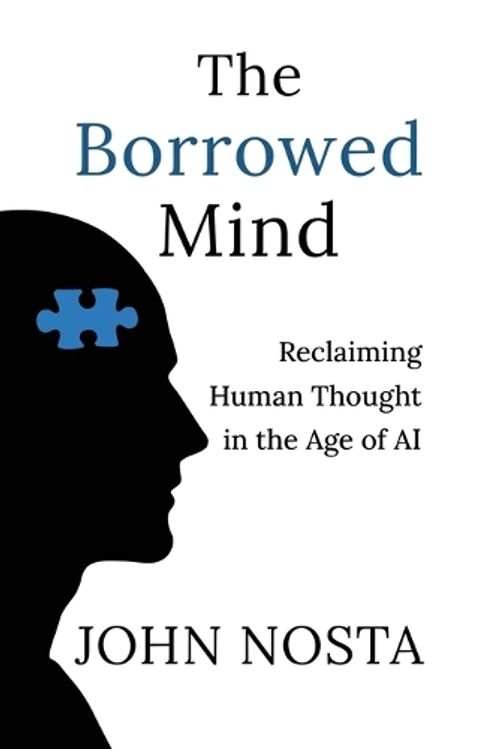
The Borrowed Mind
by John Nosta
With Georg Boch
John Nosta examines how artificial intelligence is changing human thought, judgment, creativity, and identity. Join Georg Boch to explore the questions this raises about thinking for ourselves in the age of AI.
About Georg Boch
Georg Boch is Vice President for Research & Innovation at the State of the World Forum and founder of its AI × NHI Convergence Initiative. His work explores frontier AI, human sovereignty and the choices shaping Europe’s AI future. He convenes researchers and policy experts, leads AI strategy and scenario workshops, and teaches at TROPEN Academy. With fifteen years across enterprise AI, storytelling and communication strategy, he connects technical developments with their implications for human agency and society.
November / December 2027
On the Peace of Faith
by Nicolas de Cusa
With Paolo Morley Fletcher, PhD
About Paolo Morley-Fletcher
Paolo Morley-Fletcher is an educator, strategy adviser and executive coach, and the founder of AtmanWay. His work combines strategic thinking, wisdom traditions and practical action to support change in people, organisations and society. He initiated the Wisdom Dialogue movement, bringing silence and dialogue into conversations about leadership, consciousness and peace.
Learning Objectives
- To understand the qualities that distinguish a literary work as a “Great Book.”
- To reflect upon the challenges framed by authors in ancient times in light of current global crises.
- To grapple with deep issues common to all humanity through active discussion, web forum postings, and/or paper assignments.
- To compare the major themes of the books studied.
Academic Credit
Audit free, or choose a three-credit option for your degree.
Auditing students — no credit
Join the live conversations and access the recordings.
Bachelor’s
3 academic credits
6–9 page post-paper
Master’s
3 academic credits
10–15 page post-paper
Doctoral
3 academic credits
20–25 page post-paper
Academic Credit: Students taking the course for credit should submit a post paper at the end of each year which includes six books. Bachelors level post-papers are 6–9 pages in length, Masters level post-papers are 10–15 pages in length, and Doctoral level are 20–25 pages. Papers should be written in APA style, with footnotes and bibliography. Papers should demonstrate the student’s knowledge of the books for the course and discuss how the content has contributed to the student’s understanding of themselves and to their spiritual growth. Artistic expression is welcomed.
Great Books 2027
Six books · Twelve conversations
January–December 2027
Academic credit: Bachelor’s $300 · Master’s $600 · Doctoral $900
Taking part in Great Books
Once registered, sign in to your account and return to this course page to access the “Get Zoom Access” lesson. Register separately on Zoom to receive your participation codes and reminder emails.
All sessions will be recorded and posted on this page for registered students, as well as on our Great Books YouTube playlist.
Join the Great Books discussion group to continue the conversation.
Choose free audit registration or an academic-credit option. If you do not have a user account, you can create one during checkout. Save your username and password to access your course materials.
About Instructor
Jim Garrison
7 Courses